

Why we built this
The world has a way of accumulating. The things worth paying attention to, the things worth caring about, the noise that makes it harder to tell those apart — it all sits somewhere, and it needs somewhere to go.
We wanted a place to put it down. Not to process it as a task, but to write through it until it sat differently. A blank page that would wait until we were ready, take what we had to give, and occasionally — when invited — ask the one quiet question that sent us further in rather than away.
The journaling apps we tried wanted something back: a streak kept, a metric fed, a mood logged before we’d even started writing. We wanted a tool that would simply wait.
Yewmark is what we built for ourselves. We’re sharing it because we don’t think we’re the only ones who needed it. Read the full story →
From the maker. I care for an older family member every day, and run a handful of small projects on the side. Yewmark is shaped around the days when the ritual ideal isn’t available — only a fifteen-minute window between obligations to set the day down before the next one starts.
About the yew
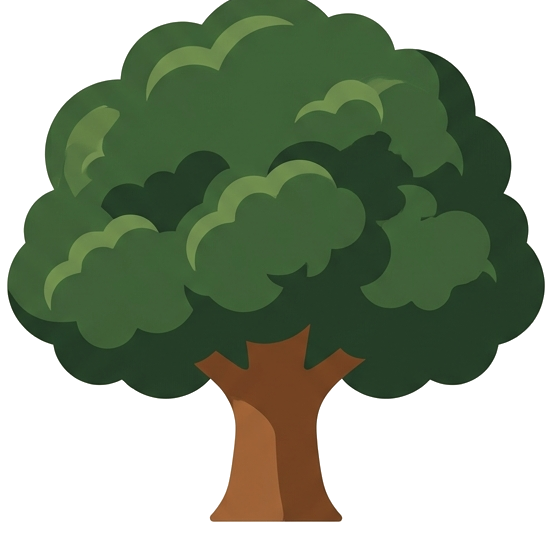
The yew is one of the oldest living trees in Europe. The Fortingall Yew in Scotland is somewhere between two and five thousand years old; the Llangernyw Yew in Wales is older still. They grow in churchyards and beside old wells, kept by villages that long since forgot why. They were here before us, and most of them will outlast us.
Yew is slow. A young tree puts on a few millimetres of girth a year. Most of its life happens out of sight, in the patient thickening of the heartwood. When the heartwood is old enough, it becomes one of the strongest natural materials we have — strong enough that for most of recorded history, the longbows of England and Wales were made from a single yew stave.
That’s the image we kept coming back to: something quietly made over time, dense from years of small additions, stronger than it looks. We thought it described what a journal should be.
Make your mark, at your own pace
The whole product comes from one tagline: make your mark, at your own pace. Both halves matter.
Mark— your entries are yours. Yewmark is for noticing what you actually thought, not for performing thought to an audience. There’s no public profile, no follower count, no feed. The only reader of your journal is you (and, sometimes, a voice in your ear that you’ve chosen).
At your own pace— five honest minutes most days will tell you more about your own life than two hours every Sunday. Two minutes once a week is enough, if that’s what fits. We built for whatever rhythm you actually have. No streaks to shame you when you skip a day. No dopamine drips to keep you opening the app. Just a clean page, ready when you are.
What we promise
- Your words travel over TLS and rest on disk-encrypted storage.
- We never use your entries to train AI models — yours, ours, or anyone else’s.
- You can export everything as JSON, any time.
- You can delete your account. Sign back in within seven days to undo — after that, your words are purged from our systems.
- The free tier is genuinely usable. Paid tiers exist so the lights stay on, not so the free tier feels broken.
- We’ll be honest if any of that ever has to change.
“We do not learn from experience.
We learn from reflecting on experience.”
— John Dewey
Open a blank page